Garden and yard walls
A garden wall takes weather on both faces and across its top, so the top rows of brick and the joints near the ground usually wear first, and often that's all that needs redoing.
Crumbling mortar or a crack running across your brick? We find out why it happened, then repair only what needs it.
Brick repair in Chino usually means repointing, where we rake the worn mortar out of the joints in your brick wall and pack in new mortar, plus replacing broken bricks and fixing cracks once we know what's causing them.
Most calls start with something you can see from the yard, like mortar that's gone sandy, joints worn back from the face of the brick or a crack that's started across a garden wall. The price mostly comes down to how many joints need raking out, since repointing is slow hand work, and to whether any bricks are broken and have to be replaced. The schedule turns on the size of the wall and on what the cracks turn out to mean, so when I come out I'll look the whole thing over and write you an estimate with the figure for your job.
I come out to look at your wall and write the estimate myself, then our own crew does the work while I check on it as it goes.
We've fixed brick in Chino and the cities around it since 2017, and the cracked walls and worn joints that take some figuring out are the jobs we're best known for.
We're licensed and insured, and the work is backed by our satisfaction guarantee, so you know who you're dealing with before anyone touches your brick.
I start by reading the cracks, because a crack that runs through the bricks tells a different story than one that follows the mortar, and the repair depends on which one you've got. Then we mark the joints that are actually worn and leave the sound ones alone, since original mortar in good shape is better than any we'd put back. We rake out the bad joints, mix a mortar to suit your old brick, pack it in, shape the joints to match the rest of the wall and clean up the brick face before we go.
Sometimes the brick isn't the real problem. If a garden wall is leaning or cracking because it's been holding back dirt it was never built to hold, patching it just buys time, and retaining wall construction is the honest answer. Brick borders and edging along a drive often get repaired alongside new driveway pavers, so the old brick, the new brick and the paving all line up.
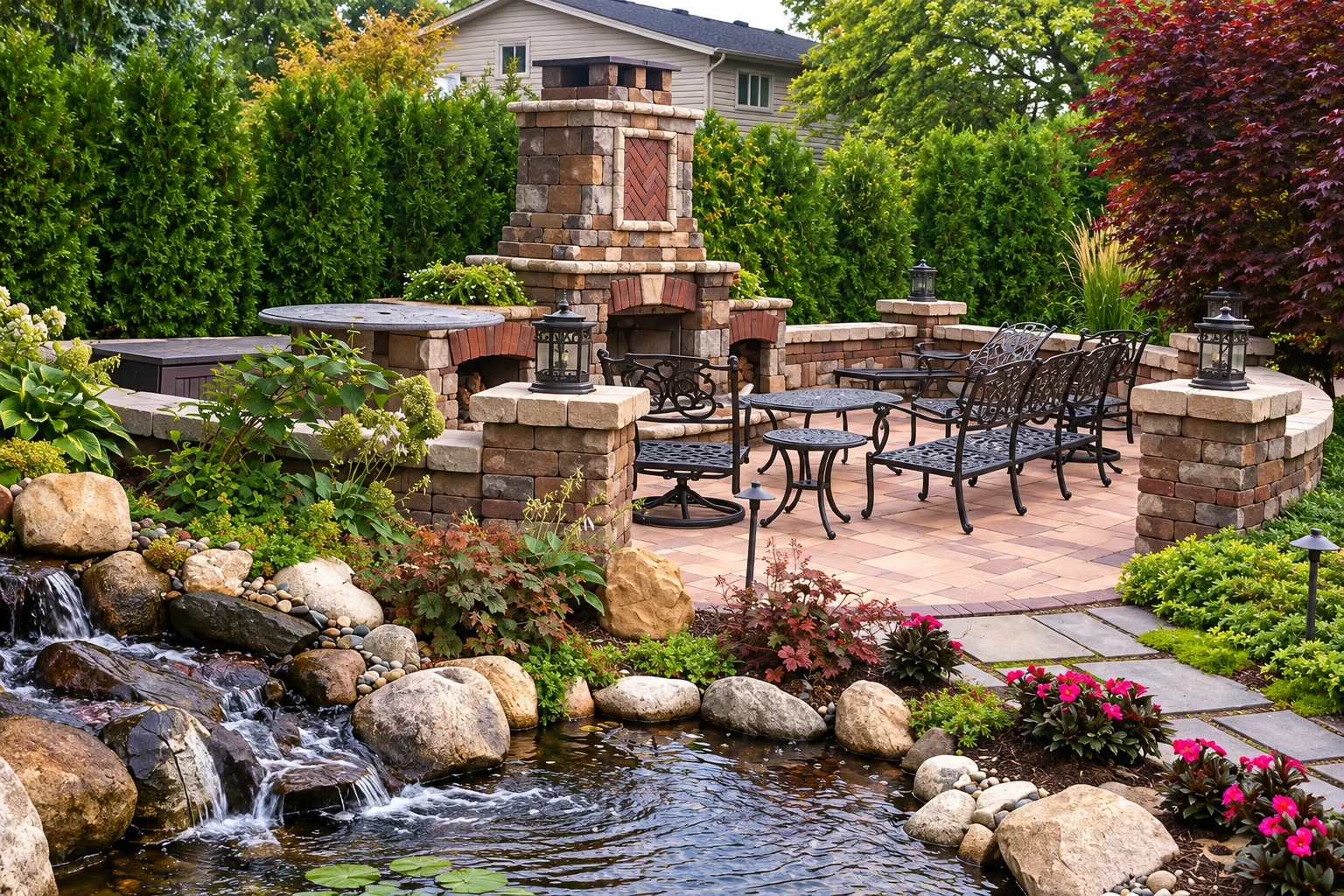
A garden wall takes weather on both faces and across its top, so the top rows of brick and the joints near the ground usually wear first, and often that's all that needs redoing.
Brick steps and planters get foot traffic and water, so loose bricks and open joints show up there early. We reset the loose ones and repoint around them so the step feels solid again.
A chimney's top joints take the most water, so they usually wear first. We look the stack over before deciding how much to repoint, because it often looks better from the yard.
Brick columns at a gate or mailbox get bumped by cars and gates, which cracks or knocks out bricks. We match a replacement brick as close as we can and set it in fresh mortar.
Send the form and we'll reply within one business day to set a time. I'll come out, look at the wall and write you a free estimate, with no obligation to go ahead.
Have a few photos of the cracks or worn joints ready, one close up and one from across the yard, so I have a sense of the job before I come out.
Let us know if it's a garden wall, steps, a chimney or the house itself, and about how much of it is affected, so we can plan the visit around it.
Call (909) 479-6261 any day of the week. We're open Monday to Friday from 6 AM to 9 PM and Saturday and Sunday from 7 AM to 9 PM.
These photos show joint styles, brick colors and wall layouts you can point to when we talk through how your repair should look.
Straight answers to what homeowners ask us about worn mortar, cracked brick, permits and who's allowed to do the work.
Your wall probably needs repointing where the mortar has worn back more than 1/4 inch from the brick, crumbles when you rub it, has holes or hairline cracks, or has pulled away from the brick edge. Mortar joints usually last more than 25 years and the bricks can last well over 100, so repointing is normal upkeep and doesn't mean the wall is finished.
Yes, a hard mortar often makes the brick around it wear out faster. Hard mixes heavy in portland cement let less moisture through than the brick does, so new mortar should match the old in color, hardness and how easily moisture passes through. Sealing brick or coating it with paint that doesn't breathe also speeds up decay, because it traps moisture behind the coating.
It can be, if the crack runs through the bricks instead of along the mortar joints. Structural cracks usually show up over windows and doors, and less often under the eaves or where the wall carries extra load. Where possible, a crack is watched to see if it's still moving, since moving cracks get a flexible sealant and settled ones may be repointed.
Permit requests in Chino go to the city's Development Services Department, which handles building and planning permits. When your job needs one, we apply for it and plan the work around the city's inspections, and if it's not clear whether it does, we check with the city's building office before we start.
Only a small one, within California's $1,000 limit for minor work, and only when the job needs no permit and the handyman employs no one on it. Past that, the state's masonry contractor license is the one that covers laying brick, fire brick and masonry walls, plus the cleaning and caulking that comes with that work.
Call (909) 479-6261 or send the form, since open joints let water in and the sooner they're closed, the less brick usually needs replacing.