Replacing a worn concrete driveway
If your concrete has cracked, heaved or sunk where the car sits, we break it out and haul it off so the new pavers start on fresh, packed base instead of old trouble.
Tired of a cracked, sunken driveway? We build paver driveways on a base matched to the cars and loads you park on it.
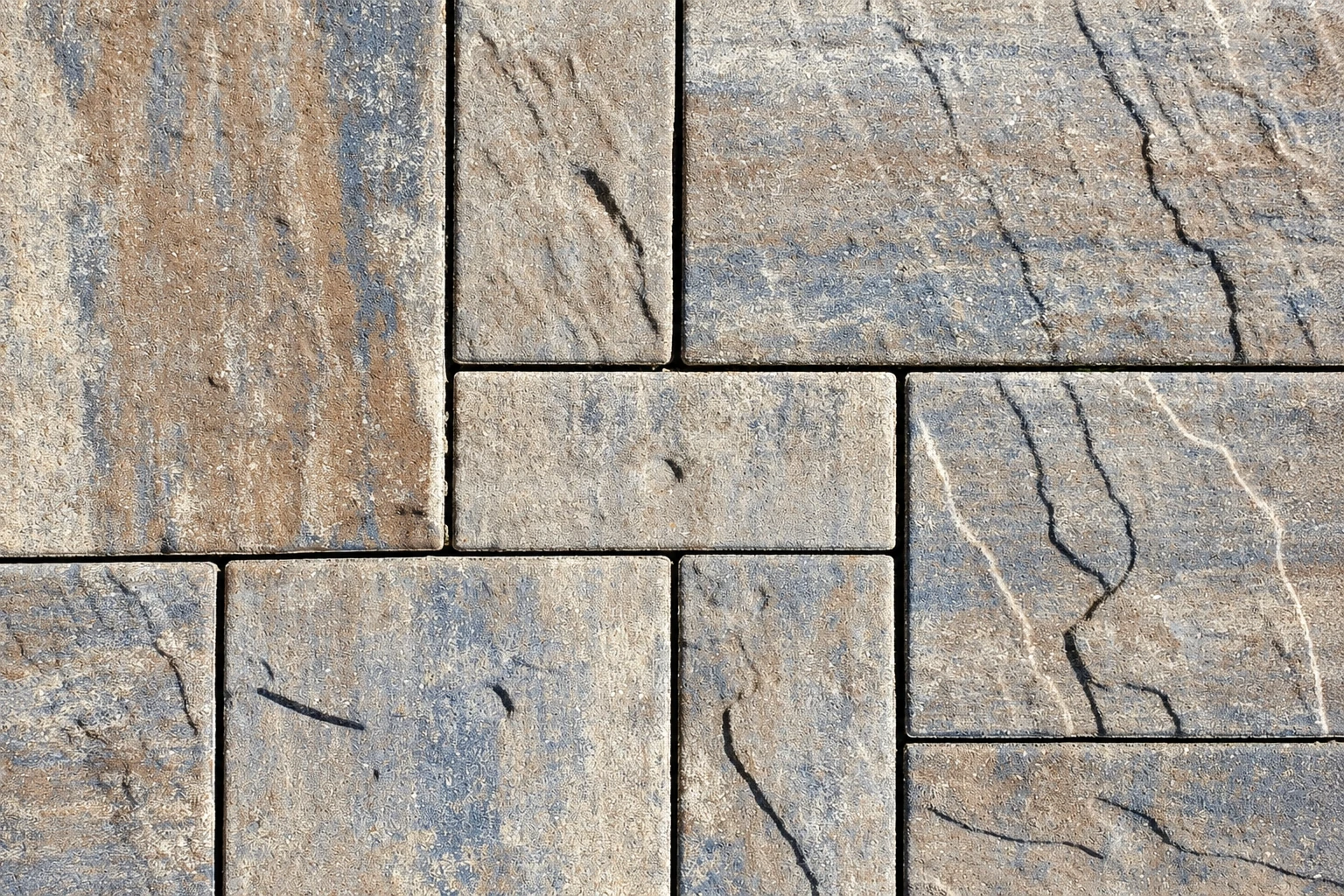
Driveway pavers in Chino, CA are concrete pavers laid over a packed gravel base and a thin bed of sand, which gives you a driveway made of separate pieces instead of one slab that can crack all the way across.
Most calls start with an old concrete driveway that's split, settled or stained past saving, or one that just looks worn out next to the house. The price moves with the size, the paver you choose, how complex the pattern is, how much old concrete has to come out and how heavy a base your loads need, and the schedule turns mostly on the tear-out and base work, so I come out and look it over with you before writing your estimate.
I come out and write the estimate myself, then our own crew does the work and I check on it as it goes, so what we planned is what gets built.
I'd rather ask how you park, where it's sunk and where water runs before I price anything, because a driveway priced first and figured out later is how rushed work happens.
We've been in business since 2017, and before that I learned masonry on other masons' crews, where I saw how a thin, rushed base turns into sunken pavers a few years later.
I start by asking how your driveway gets used, everyday cars or heavier loads, because that decides what goes under the pavers, and the base matters more than the pattern on top. Then we mark it out, break out and haul away the old driveway, and dig down to firm ground. Chino has a lot of loose, silty, sandy soil with groundwater not far down, so I want to see what's under your driveway before we settle the base. We pack the base in layers, smooth out a thin bed of sand, lay the pavers in your pattern, cut the edges clean and set edging along the sides to hold them in, then run a compactor over the whole thing and sweep sand into the joints to lock it together.
Driveways usually sit next to other masonry, so we look at that too. If a slope beside the driveway is pushing soil onto it, or the yard needs leveling for it to fit, we can build a retaining wall as part of the same job. And if the brick planters, columns or front steps beside it are cracked or worn, our masonry restoration work brings them back so they don't look tired next to new pavers.
If your concrete has cracked, heaved or sunk where the car sits, we break it out and haul it off so the new pavers start on fresh, packed base instead of old trouble.
If you park a work truck, a trailer or an RV on it, tell me early, because that changes what goes under the pavers, and it's easier planned in than fixed later.
Pavers make it easy to add a strip along the side or a pad for another car, and if your driveway is already pavers, we can usually match the pattern and edge it cleanly.
A driveway rarely sits alone, so we plan where it meets the walkway, the planters and the front step, and help you pick a color and pattern that suits the house.
Send the form and we'll reply within one business day to set a time. I come out, look at the driveway with you and write a free estimate, with no obligation to go ahead.
A rough length and width, or just how many cars it fits, gives me a starting picture before I come out and measure it properly for the estimate.
Tell me whether it's everyday cars or something heavier, since that's the first thing I'll ask and the biggest thing that decides what we build under the pavers.
If you're curious about pavers that let water soak through, say so, and we'll talk through whether they suit your driveway while I'm out there looking at it.
These pictures show paver colors, laying patterns, borders and nearby masonry you can point to when we talk about your own driveway.
Straight answers to what people ask before a paver driveway goes in, from cost and lifespan to permeable pavers, permits and contractor licenses.
Sand-based concrete paver driveways in the San Bernardino area usually run about $16 to $19 per square foot, and that doesn't include tearing out an old driveway. That's what the area's market runs, not our price, and your own number comes from the estimate once I've measured and seen what has to come out.
A paver driveway usually lasts somewhere from 25 to 75 years, against about 30 to 40 for a well-built concrete one. Those ranges overlap, so the bigger difference is repair, because a cracked or stained paver can be lifted out and replaced on its own, while a cracked slab usually means patching or breaking out a section.
Permeable pavers fit a lightly used driveway better than a busy one, since extension guidance says they tend to be weaker than regular paving and can shift or crack where cars turn often. They also need built-up dirt cleaned out regularly so water keeps soaking in, and where soil drains slower than half an inch an hour, one manual calls for drain pipes underneath.
A concrete slab under the pavers is the sturdier build to weigh if you park heavy loads, with the pavers set in sand or mortar on top instead of the standard gravel and sand base. It usually costs more up front, and for pattern, one paver manual names herringbone as the best at staying locked under braking and turning cars.
Chino's Public Works Engineering issues right of way permits and inspects work in the city's right of way, which on a driveway is usually the part out by the street. When a job needs a permit, we apply for it and plan the work around the inspections, and if it isn't clear, we check with the city before we start.
California's Contractors State License Board includes paving in two license classes, C-12 Earthwork and Paving and C-29 Masonry, so it's fair to ask any contractor which one they hold. We're licensed and insured, and I'm happy to go over that when I come out to look at your driveway.
Call (909) 479-6261 or use the form to set up a visit, and the driveway we build is backed by our satisfaction guarantee.